Showing posts with label History. Show all posts

Tuesday, 17 November 2009

Reasons behind the similarity in culture between Baweanese and Malays

(Qurban)

It is not surprising that the culture of the Bawean people is similar in many ways with that of the Malays (here I am referring to Malay ethnic group i.e. the Malays in Singapore, Malaysia and Riau Lingga including part of Sumatra). The Baweanese and the Malays originated from the same ancestors (i.e. from the people of mainland Asia) and practiced the same belief (i.e. Islam)! According to history, the evidences that have been uncovered by archaeology clearly showed that in prehistoric times, the Malay Peninsula formed part of a land bridge for successive waves of migrants moving southwards from the Asian mainland towards Indonesia and Australia.

(Two relatives related by marriage met during Eid - One Javanese and the other a Baweanese wearing a Mandarin Collar button-up shirt)

In a history text book, "Jessy: Malaysia, Singapore and Brunei 1400-1965" by Joginder Singh (2nd revised edition 1974, Publisher: Longman Malaysia Sdn Bhd, Kuala Lumpur), it mentioned that the first of these migrants may have been living in the Peninsula for as long as five hundred thousand years B.C. Then a new group of people arrived from the Indo-China in about 8,000 B.C. Their descendants are the Senoi and the Semang aborigines of modern Malaysia. Following that, there were the migrants from the north from Southern China about five thousand years ago, bringing with them an advanced Stone Age culture. They are known as the Proto-Malays (i.e. Melayu asli) and they are the ancestors of the present Malays (Deutero Malays -i.e. the Malays with mixed blood) of Malaysia, Singapore and Indonesia.

(Surah Al-Fateha, the opening of Al-Quran -the sacred book of Islam)
 
Hence, sharing the same ancestors, the Baweanese and the Malays (ethnic group) are the likeness of two cousins sharing the same grandfather! It is the same too for the other ethnic groups in this Nusantara region such as the Achenese, Bataks, Bugis, Minangkabaus, Banjarees, Javanese, Balinese, Ambonese and etc. However among the above ethnic groups, generally the Achenese, Bugis, Minangkabaus and Banjarees are Muslims. [Take note: the Malays (referring to the Malay race) in the Philippines are majority Catholics/Christians - Filipinos too belong to several Asian ethnic groups, grouped within the Malay or Malayo-Polynesian speaking people, who speak Austronesian languages. The concept of Malay race is not the same as in the concept of Malay ethnic group]
 
(During a Baweanese matrimonial ceremony -1980s)
 
(Aqad Nikah)
 
(Bersanding)

Sharing the same religion is another reason for the similarity in culture between the Baweanese and the Malays. For example, 'Aqiqa, Qurban, Eid, Aqad Nikah, Circumcise, Thanks-giving (Doa Selamat), Tahlil, etc… are derived from the Islamic culture. However, the way they are being performed varies.

('Aqiqa)
 
For example, the Baweanese regard 'Aqiqa as necessary even though they knew it is not compulsory in Islam. 'Aqiqa is a ceremony for a new born baby. Usually it is being held grandly to express one's gratitude to Almighty Allah for the gift of life. Often during this ceremony there will be ''Berzanji'' (the reciting of the History of Prophet Muhammad s.a.w). This is to commemorate the struggles and sacrifices made by Prophet Muhammad s.a.w. Generally, the Baweanese people are strong believers of Islam and they want to emulate closely the good act of the Prophet s.a.w. They are very good in "Berzanji" and most of them were blessed with good reciting voice. Most of them are proficient in reciting Al-Quran with perfect "Tajwid". Many among them are "Hafiz" (a term used to describe those who memorise the entirety of the Quran).
 
(Berzanji)
 
However, I was told by my late grandfather that before Islam, the Bawean Islanders practiced Shamanism (a range of traditional beliefs and practices concerned with communication with the spirit world). Then a pious Muslim (believed to be from Middle-East) came to Bawean Island and taught Islam to the Islanders. Gradually, they accepted Islam and finally 100% of the inhabitants became Muslims. As a little girl, I used to hear the Pondok people talking about the Mystical Bawean Island. They said that non-Muslims would not get out of the Island alive once they stepped into it -they would die mysteriously. Air-planes could not fly over the island too- it would crash! Is it true?... I have no comment.

(A typical Baweanese meal)

Likewise the Bugis, Javanese, Minangkabaus and others, the Baweanese and the Malays shared the same culture and traditions with minimal differences -the likeness of the similarity in appearance of two cousins due to sharing the same grandparents but not parents. For example in the art of self-defence, the Bawean people called it “Pokolan” and use the “Parang” while the Malays called it “Pencak Silat” and use the “Keris”. Look at their dishes; the Malays called the red chilli soupy gravy, ‘Asam Pedas’ but the Baweanese called it ‘Kela Tomes’ –the dishes look the same but taste quite different due to the portion of ingredients used.
 
(Notice the Baweanese teenage wearing green Baju Kurong while behind her, is a Baweanese woman wearing the kebaya with sarong batik -photo taken in 1990s)

How about their attire? –the traditional older generation Baweanese women prefer Kebaya with sarong batik rather than the Malay Baju Kurong. Often, the young Bawean ladies wear Baju Kurong thinking that it is the traditional dress. However, this is not true. The traditional costume of the Baweanese ladies is the kebaya with sarong batik and for the Baweanese men is the Mandarin collar button-up shirt (influenced by the Dutch colonialists in Indoneasia) with sarong 'pelikat' or pants –there is no 'kain samping'…. just like any other typical traditional Indonesian attire!

(A Baweanese couple from Ipoh, Perak in traditional attire -1970s)
 
Gradually through the years, the differences in culture between the Baweanese of Singapore and the Malays of Singapore (as well as the Baweanese and Malays of Malaysia) lessen due to intermarriage between the people in these two ethnic groups. This is another reason for the similarity in culture between the Baweanese and the Malays. The same happened to the other ethnic groups living in the Malay community. Today the differences in culture between these ethnic groups are so minimal that some of them in this community identify themselves as Malays, especially to the Chinese, Indians, Eurasians and foreigners. The reason given behind this is that, it saves them the trouble of explaining their true ethnicity backgrounds.

Monday, 16 November 2009

Who are the Baweanese (Boyanese)?

(Two Baweanese sisters -Grand-aunt Hamsi and Grand-aunt Hannah in 1980s)

Few days ago, an undergraduate had asked me about the Bawean race for her research work. She wanted to know the general surface of this race and the reasons to the similarity in culture to that of the Malays. I had replied her and now I like to take the opportunity to write it in this post.

(Location of Bawean Island)
 
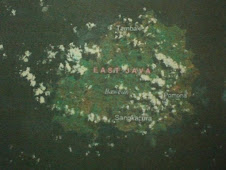
As written in my previous post, the Baweanese are not Malays. They are people originated from the Bawean Island situated in the Java Sea. This tiny Island belongs to the Republic of Indonesia and is also widely known as "Pulau Puteri" which literally means ''Island of the Woman'', referring the island belongs to the women. There are more women than men living in the island because most of the men have gone ''Merantau'', leaving their homeland in search of opportunities abroad.
 
(Map of Bawean Island)

Hence, the traditional homeland of Bawean descents from all over the world, wherever they are today -Malaysian Baweanese, Singaporean Baweanese, Australian Baweanese, etc., is Bawean Island. The forefathers of these Baweanese were immigrants in the country they are residing now. On the other hand, the Malays are the indigenous people of the Malay Peninsula and the Riau Lingga Archipelago.
 
(The Nusantara Region)
 
The Malays speak Bahasa Melayu while the Baweanese especially the Bawean islanders converse among themselves in Bawean language. However today, among the Baweanese descents living outside Bawean Island especially in Singapore, this language is "dying". Generally, the descendants of the Bawean people in Singapore do not speak the Bawean language. The older ones are comfortable conversing in Bahasa Melayu while the younger ones are comfortable conversing in English language. This is because Bahasa Melayu is the National language of Singapore while English is the first language taught in schools as well as the language used commonly in the working sector.
 
(During the month of Haj in 1980s -at Changi airport sending off my Mum to Makkah)

In Singapore, the Baweanese live among the Malays in the Malay community due to the similarity in culture and having the same religion. Similarly, the Baweanese in Malaysia are part of the Malay community. Firstly, this is because they are from the same region –the Nusantara Region i.e. South-east Asia. Secondly, they are bound together by a common belief –i.e. Islam. Islam has provided a bond between the Baweanese and the Malays.
 
(A Baweanese family -My family with Obek Adnan and his family in 1980s)

Islam has also bound up the other Muslims from different ethnic groups with the Malays. Hence in Singapore as well as in Malaysia, the Bugis from Celebes (Sulawesi), Achenese from Acheh (Sumatra), Minangkabaus from Padang (Sumatra), Javanese from Java, Banjarees from Banjarmasin, Baweanese from Bawean and the Malays shared a common belief and they live in the one big community that is, the Malay Community!
 
(The Baweanese during Salam Lebaran 2009 organised by PBS)

Sunday, 15 November 2009

Am I a Baweanese or Malay?

(The Head of Batam Cultural Department giving the opening speech)

During the last June school holiday, my sister and I visited Batam Island. We stayed there for a week to get away from our busy lives in Singapore. I bought five tickets for my family and friends to attend the "Pesta Kebudayaan dan Masakan Nusantara". It was organised by the Cultural Department of Batam in an effort to forge close ties among the different ethnic groups in the Nusantara region. The Head of the Batam Cultural Department gave the opening speech.

My sister was amazed to hear him speaking fluently in Malay language. She immediately asked me, "Why is this man speaking in Malay like us, with no Indonesian accent. Shouldn’t he be speaking in Bahasa Indonesia?" I replied, "This is because he is a Malay." She asked me again, "How can he be a Malay when he was born and raised in Batam, in Indonesia." I explained to her that the indigenous people of Batam are the Malays. Batam is part of the Riau Lingga Archipelago –the homeland of the Malays.
 
I explained further to my sister that only the Batam Malays speak Bahasa Melayu while those who speak Bahasa Indonesia are obviously from other parts of Indonesia –immigrants mostly from mainland Java. Then she asked me again, "So, what are we? Aren’t we Malays?" I replied, "Look at your NRIC. What does it read?" She answered, "Boyanese." I replied, "Yes, we are Boyanese!" I further told her that both of us are Baweanese (Boyanese) descents because our father was born in Bawean (Boyan) Island and his forefathers were born and raised there.
 
Such confusion is common nowadays. Most Baweanese descents (outside Bawean Island) from the younger generation, especially in Singapore, believe that they are Malays….my sisters, brother, cousins, daughters, son, nephews and nieces … all of them thought that they are Malays. Very sad indeed!
 
(Two Baweanese - same race but different nationality)

Tuesday, 30 June 2009

My Memories of Sungai Rokam

Jalan Sungai Rokam and Jalan Dato' Keramat are the two places in Malaysia that I am familiar with, in connection to my Baweanese roots. These are the two places where the early generation of my ancestors used to settle when they first came to the Malay Peninsula. Flashes of memories with my relatives still remain lingering in my mind. Memories of my visits to their homes during childhood keep coming back as I refreshes them by looking back at the photos in my dad's photo album.

(Aunt Nuri and Aunt Yati - Sungai Rokam1970s)

I remember basking under the hot afternoon sun of Ipoh, playing with the other Baweanese kids in the playground until I got myself tanned. They spoke the Baweanese language fluently. The kindness showed by my Grand-uncle Hodri, husband of Grand-aunt Moya, cannot be forgotten. He gave me a bar of chocolate with a big smile on his face as he stood at the doorway after returning home from his work place. Back then I was a little girl not more than seven years old.

(Nenek Moya at my home)

I was very much curious with the things in the home of my dear Grand-aunt Moya. They were very much different from those used by Grandma Ramlah at Pondok Kalompang Gubuk. I was particularly fascinated with the stool-like grater and was always the first to volunteer grating the coconuts! I remember Aunt Yati teaching me the correct method of using it as Aunt Nuri and Uncle Taqim watched with lots of smiling on their faces. With my small little hands, it was not an easy task for me to perform. However, I was happy to be of great assistance in the house. Back then I was their faithful apprentice who was willing to do as told. Appreciated I was, they taught me lots of 'kampong' stuffs which could not be found in my hometown, the Town of Little India, the area in which Pondok Kalompong Gubuk was situated.
 
(Uncle Tapa and Dyan - Orchard Road 1987)

It has been more than twenty years since the last time I met my relatives in Ipoh and yearning to meet them again. I regretted very much for not able to attend the wedding held by Aunt Yati in the occasion of her daughter's marriage. It was the period when I was living in the middle-east. I miss my relatives in Ipoh greatly and hope very much to visit them in the future, Insha'Allah. Below are photographs of Nenek Moya's visit to Singapore with her family in late 1960s. We were having picnic at Changi Beach.


(This post is dedicated to my relatives in Ipoh, especially to Aunt Yati, Aunt Nuri and Uncle Taqim. To Aunt Nuri: I never forgotten the warmth that you gave me during my visits to your home in 1960s. To Aunt Yati: Your kind assistance in the preparation of my wedding as well as my sisters are always in my mind.)

Thursday, 9 April 2009

Uncle Zain, My Ipoh Connection

The marriage between Aunt Fatimah and Uncle Zain is a blessing for the members of the extended family that generated from the family of my Great-great-grandpa Jusop. This union in matrimony had brought closer two nuclear families in an extended family. Uncle Zain is the cousin of my late maternal grandmother, Hajah Ramlah. Grandma Ramlah's mother is the older sister of Uncle Zain's father whom my mum used to call Grand-uncle Jesin (Hussein). He followed his father, my Great-great-grandpa Jusop, to Malaysia from Bawean Island during the British colonization in the Malay Peninsula. They used to live at Sungai Rokam in Ipoh, Perak.

(Hari Raya Eid-ul-Fitr 1995)
 
According to Aunt Fatimah, my Great-great-grandpa Jusop had another marriage, having another set of children from his other wife. And through her (descendants), he had produced the first batch of several well-educated Malaysian of Baweanese descent professionals in his family; a banker, two engineers, an accountant, a doctor and a lawyer –the well-known six brothers in Ipoh that became successful through educations. One of them is Hj.Asmuni bin Awi, the well-known lawyer turned Politician in the State of Perak.
 
(A proud Grandfather)

Uncle Zain is himself among the successful one in this family. He is an ex-army officer who received the title Dato', given to him by the Sultan of Pahang due to his bravery, serving the Malaysia Military. During his army life, he was always working overseas. I remember during my childhood he used to bring goodies for me and my sister every time he returned home from Africa to Singapore at Pondok Kalompang Gubuk. The children of the Pondok loved him as he used to entertain with stories from his army adventures working in Congo.

(Nenek Moya's first and last visit to my home - January 1996)
 
Uncle Zain was born and raised in Ipoh, Perak. His older and only sister, my late dear Grand-aunt whom I used to call Nenek Moya (Salmah), loved him very much. She took care of him since he was a little boy. My mum told me that Nenek Moya used to give up her portion of food to her little brother during their difficult period living as orphans. I always remember Nenek Moya as a wonderful lovable person. During my childhood, I used to accompany my grandparents every time they visited Nenek Moya and other relatives in Ipoh.

Like Nenek Moya, Uncle Zain treats me and my siblings with kindness. Spending my time with Uncle Zain and his family makes me happy. Often I forgotten that he is only my uncle. He makes me feel as though I am his daughter – a daughter he wishes to have. Uncle Zain is like a father to me. He is a generous and kind-hearted person; free from black spots covering the heart -the disease of a bad-hearted soul.
 
(Aunt Nuri and Aunt Yati, the daugthers of Nenek Moya -visted Singapore in April 1986)

The relationships between Uncle Zain and my father were more than brother-in-laws. They were good friends who always helped each other. Uncle Zain was always there for my father in good and bad times. My father too was always there every time Uncle Zain needed a helping hand. I remember during the time living in a HDB flat, my father offered Uncle Zain and his family to live together with us while waiting for their home in Johor to be ready. Aunt Fatimah and her two sons lived with my family for about six months while Uncle Zain was out-stationed in Congo. During that period, as the oldest among the little ones, I used to bring my little cousins to the playground and watched over them as they played happily with the other kids living around the area.

Until today my cousins and I are very close. To them, I am more than a cousin – an older sister living in Singapore. Indeed Uncle Zain's family members are my next-of-kin in Malaysia. Through marriage, Uncle Zain and Aunt Fatimah had made the blood-ties stronger between my Singaporean relatives and the relatives in Malaysia.

(This post is dedicated to my dear Uncle Zain and his family. According to me, Uncle Zain and Aunt Fatimah is a perfect match made in heaven. Their children are my blood-ties and always be my dear little brothers even though they are now adults. To my Malaysian cousins - indeed we are in a family of different Nationality, living in two different countries linked by a causeway ....yet... We are one big family and will always be...)

Friday, 22 August 2008

Kampong Amber

(My extended families living in Kampong Amber since 1950s)

Kampong Amber was once situated at Amber Road, in Katong area. There were several Singaporean Baweanese families living side-by-side with the Malays in this kampong. Among the Singaporean Baweanese who previously lived there were my paternal grandma and aunties. When Grandma Asmaniah remarried, she moved out from Pondok Kalompang Gubuk to live with her husband in Kampong Amber, while my dad lived with his sister, Aunt Jamaliah, in the same kampong. Later on when my dad married my mum, he moved back to Pondok Kalompang Gubuk, living there for the next fourteen years before moving out of the Pondok to live in HDB flat.

(Singaporean Baweanese Wedding at Kampong Amber in early 1960s)
 
Even though I lived in Pondok Kalompang Gubuk for the first twelve years of my life, I often stayed over at my Aunt Jamaliah's home, spending the whole school holidays in Kampong Amber. The memory of kampong life always lingers in my mind recalling the period of joy, having lots of fun with my cousins and kampong friends, playing in the open within the compound of Kampong Amber. We played all sort of kampong games from catching spider to playing hide-and-seek to hop-scotch to skipping ropes and racing games.
 
(My parents visiting their relatives in Kampong Amber during mid-1960s)

I could still recall the morning sound of dawn; the crowing of the cocks and the chirping of the birds on the trees, acting like the alarm clock, waking everybody up. The water from the well was icy cold in the early morning and was very useful in waking-up those sleepy heads. I really miss the kampong life atmosphere! Those were the days and the good times of my childhood, the wonderful period of my life. During those days, I was extremely happy and felt fortunate to have beautiful family and wonderful extended families, the people whom I loved, living happily all around me.
 
(I was in my dad' arms while he was standing beside his step-mother.... his step-father remarried not long after Grandma Asmaniah passed away....during mid-1960s)
 
Indeed my dad had given me a splendid childhood life, the period in which never in a million years could I ever imagine that somewhere in my life ahead that I would be in a state of misery, especially during the depressing period of seeing my youngest sister and only brother to experience sadness in their childhood life. They did not have the same beautiful childhood memory as mine. The childhood life of my two youngest siblings was the most difficult period of my life.
 
(Present day Amber Road)
 
(Along this stretch of road there are several blocks of condominiums)
 
(Look!!! a palm tree from the past Kampong Amber is still standing tall at the same spot!
 .... I'm just joking! :D )
 
(This condominium is indeed very high!)

Monday, 4 August 2008

My Lineage II; My paternal grandparents

My dad's mother, Asmaniah, was the middle child in the first generation family of Baweanese-Japanese mix. Grandma Asmaniah married Grandpa Rawi bin Hj.Noor, a local Baweanese. Grandpa Rawi happened to be a relative of my maternal Grandpa Hj.Siddik bin Ismail. My two grandfathers were related by blood to each other.

(My late Grandma, Asmaniah binte Maksar)

Grandpa Rawi was very much in love with travelling. Perhaps, it was rather a job, earning some income to support his family than merely a passion to travel abroad. I assume he was a small time trader for according to my paternal aunt, he often travelled to the Malay Peninsula even after he got married and had a family of his own. He used to bring his entire family with him to any destination he travelled to. Hence, Grandma Asmaniah was always on the move, accompanying her husband. My two older aunties, Aunt Saleha and Aunt Jamaliah, were born in Kuala Lumpur while my dad, the third child was born in Bawean Island in 1940. From the stories related to me about my grandfather's family, it seems that they were living comfortably.
 
(My late Grandpa, Rawi bin Hj.Noor)

My father was near two years old when the family travelled to Singapore in late 1941. It was unexpected that the trip turned out to be a one-way journey that changed the life destiny of my dad's family. In December 1941, the Japanese dropped the first bombs on Singapore. The next year the Japanese invasion forces swept through Indonesia and Malaya. In January 1942 they took over Malaya and Singapore was captured in February the same year. Due to war, my father and his family could not return to Bawean. Grandpa Rawi had no choice but to settle in Singapore during the two terrible years of Japanese occupation. The family took shelter at Pondok Kalompang Gubuk.
 
(My late dad, as I remember him always)

After the dropping of atomic bomb in Hiroshima and Nagasaki by US military, the Japanese soldiers in Singapore and other parts of the Malay Peninsula were instructed by their government to surrender themselves to the British authority. Aunt Jamaliah narrated to me that the ordeal of war was terrifying and unforgettable. She said that during the Japanese occupation life was very difficult and full of misery. Most of the time, she had to hide because she was afraid to be taken away by the Japanese soldiers. Aunt Jamaliah was sad to see her mother very much traumatized by the warning sirens and the sound of Japanese jet planes. According to my aunt, her mother used to hide and scream out of fear, closing her ears tightly with her hands, every time the sound of planes could be heard, even after the war was over.
 
(My Aunt Jamaliah and her dear niece during Hari Raya AidilFitri 2007)

After the Japanese occupation, the torn and tattered Singapore was very much in-need of manpower to build up the country's economy. Like many other foreigners who were stranded due to war, my grandfather and his family were given the opportunity to become Singapore citizen by the British government. They became Singaporeans and never had the chance to return to Bawean after that. Their home and a plot of cultivated land in Bawean were taken care by their relatives. My dad had given all his properties in Bawean to his relatives before he passed away.
 
(My Aunt Saleha during 1980s)

The family continued to live at Pondok Kalompang Gubuk. Grandpa Rawi earned his income working as a personal driver for a British family. My grandfather's family expanded with the birth of two more children, Aunt Nema and Uncle Samad. Unfortunately, he was unable to see his youngest son. He passed away before my uncle was born. Grandma Asmaniah became a widow for a while. Later on, she married to a Singaporean Baweanese by the named Ustadz Sainay. She remained as his wife until her death in late 1964. I was then near two years old.
 
(Aunt Nema and her husband during 1960s)